The read-back
A note is written by someone who was on the call and read by someone who wasn't. Both of them are you.

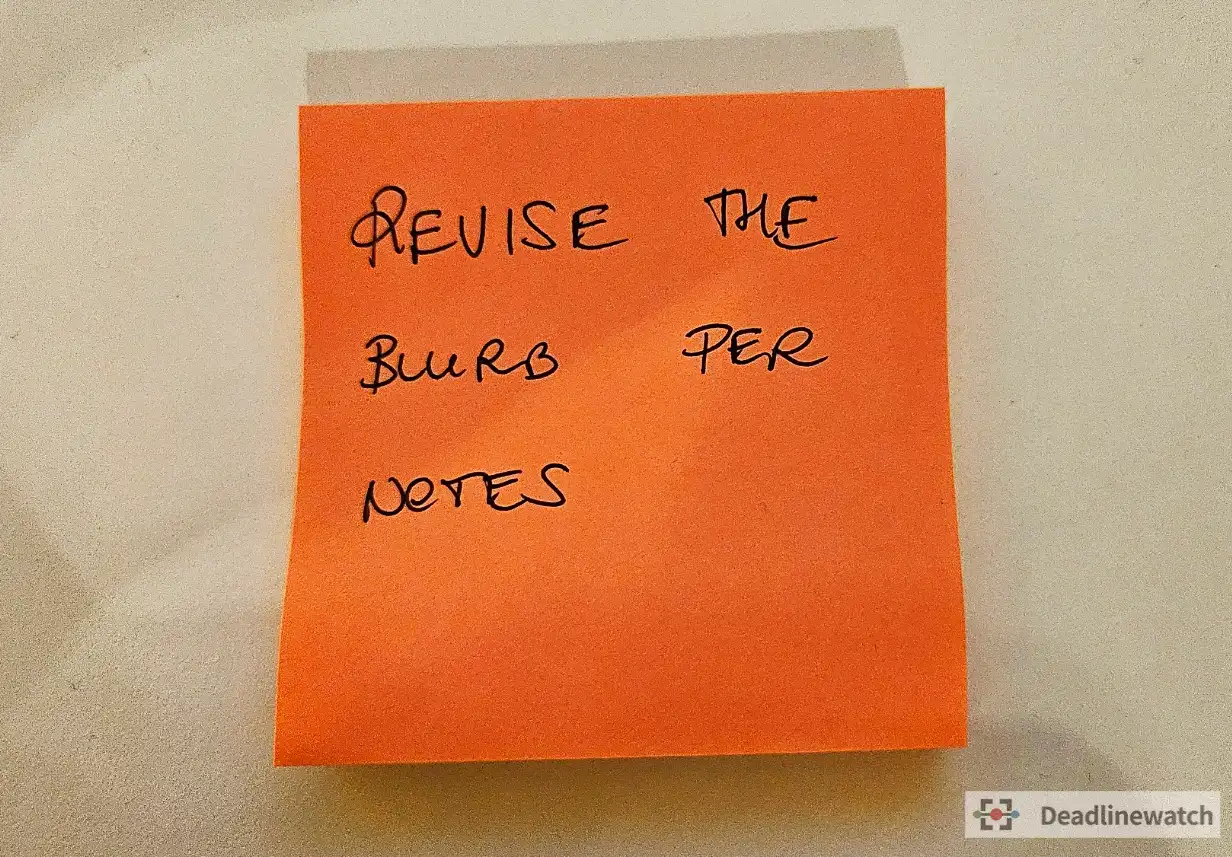
“Revisions, Thursday.” On the call it could not be clearer. A week later, with three sets of revisions under way, it could be any of them.
The note is accurate. It’s also close to useless, and nothing happened to it in between. What changed was the person reading it.
Two people handle every note
A note taken on a call is written by an insider. You know who is speaking, which piece of work this is and what was agreed a minute ago, so you write the least that will do. A date and a word are enough, because everything else is still in the room.
Days later the note is read back by a stranger, and the stranger is you. The room is gone. What’s left is a date with a label that used to mean something.
I have written notes this way for as long as I’ve taken calls, and I still do. The writing was never the weak part. The read-back was.
What the stranger does next
What the stranger does next is expensive. First comes the search, which on paper means hands going through a stack of sheets. Then comes the guess, and a guess about a deadline is a small bet placed with someone else’s date. Sometimes there’s the call back as well, the slightly awkward one that begins, “When we spoke last week, which revisions did you mean?”
None of it costs much once. It costs the most in the weeks when you have the least to spare, because those are the weeks with the most notes.
Now and then the stranger really is another person. Someone covers for you for a week, or picks the work up after you. A note that only its writer could read was never a record of the deadline. It was a prompt for a memory, and the memory went home with you.
The date survives and the name doesn’t
A date needs no help. The 14th is the 14th, to anyone, in any month you find it. Digits even survive a hurried hand better than words do.
The name is different. “Revisions”, “the draft” and “call her back” lean entirely on what you knew at the moment you wrote them, and that knowledge doesn’t keep.
In 1885 Hermann Ebbinghaus learned lists of meaningless syllables by heart, then measured how much of the work was saved when he learned the same lists again later. After a day, about a third was saved. After a month, about a fifth.
A phone call isn’t a list of syllables, and what you know about your own work lasts longer than that. I think the direction is the same, though. The page stays exactly as you wrote it, while the part that was only in your head thins out, quickly at first.
Writing for the stranger
The habit that helps is small, and it costs about three more words. The name gets written for the person who will read it, with the who and the what left in. “Second-round revisions to the proposal, Thursday” takes two seconds longer than “Revisions, Thursday”, and it will still make sense in a month.
There’s a plain test for a line like that. Could someone else at your desk act on it? If a colleague could, then so can you in two weeks, because by then you’ll know about as much as the colleague does.
Where the name goes on working
The name does more work later than the date ever does. In any list, on paper or on a screen, the name is what your eye looks for. It’s what you search by. It’s what a reminder says to you when it comes.
A reminder that reads “Revisions, due in 3 days” is the same stranger’s note, delivered on time. In the deadline app I built for my own dates, a deadline needs only two things, a name and a date, and I’ve come to think the name is the one that deserves the care. This is where the name shows up.
You’re on the call for ten minutes. You’re the stranger for the rest of the deadline’s life.
Common questions
Why are my own notes hard to understand a week later?
Because you wrote them with everything the call had just told you, and you’re reading them without it. The note didn’t change. What you knew around it faded.
What should a note about a deadline include?
A date, and a name a stranger could act on. The date looks after itself. The name needs the who and the what, in a few plain words.
Does it matter what I call a deadline in an app?
Yes. The name is what you look for in a list, what you search by and what a reminder says, so a vague name stays vague everywhere it appears.
Sources
Hermann Ebbinghaus, Memory: A Contribution to Experimental Psychology (1885, in the English translation of 1913 by Henry A. Ruger and Clara E. Bussenius), chapter 7, “Retention and Obliviscence as a Function of the Time”. https://psychclassics.yorku.ca/Ebbinghaus/memory7.htm