Catching and keeping
Writing a date down and keeping it are two different jobs. Most trouble with paper, and with apps, starts when one tool is asked to do both.

A deadline rarely arrives at a good moment. It comes in the last minute of a call, at the bottom of an email about something else, in a doorway while you’re on your way to another room. You have one hand free and about three seconds, so you write it on whatever is nearest. For most of us that is still paper.
I have done this all my working life, and I still do it every day. I have also always known where paper lets me down. What took me longer was a way to say why.
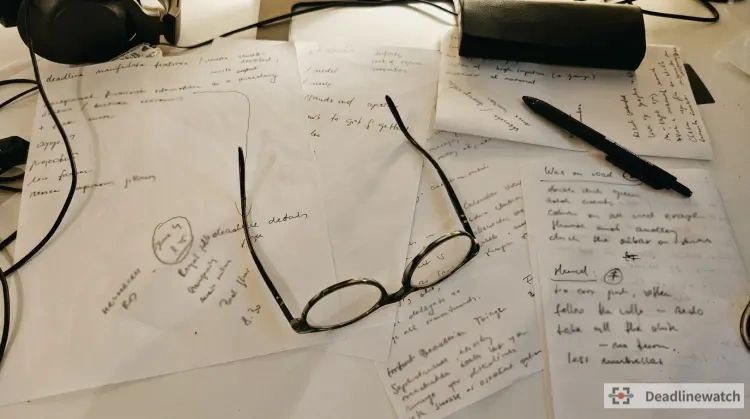
The page was doing two different jobs. The first is catching. The second is keeping.
What catching asks for
Catching is getting a date out of the air before it’s gone. It has to be fast and it has to forgive you, because the date often isn’t finished when it arrives. It’s “sometime the week of the 14th” or “she’ll confirm Thursday”, and a good catcher takes it in that state without asking a single question back.
Paper is a great catcher. It needs no password and has no fields, it works while you’re still listening with your eyes up, and it accepts half a sentence, an arrow or a question mark. Nothing else on your desk is ready that quickly, and nothing else is that patient with a thought that isn’t whole yet.
This is why so many careful people, with every app available to them, still reach for a pad during a call. They aren’t behind the times. They’ve picked the right tool for the first job.
What keeping asks for
Keeping is a different kind of work, and it lasts much longer. A date that has been caught still has to stay true while it moves, and dates do move. It has to take its place among all the others, so you can see what comes first. It has to be found again in a week by someone who has forgotten the call. And it has to speak up before the day itself, on a morning when you weren’t going to look.
A note can do none of that. A note knows only its own date. It doesn’t know about the note beside it, or what day it is today, or that everything was moved to Friday. It stays where you put it and says what it said when you wrote it.
So the page that was perfect at 2:15 on Tuesday is a poor home for the same date by the following Monday. Nothing about the paper changed. The job did.
Where the trouble starts
Most of the trouble starts in the gap between the two jobs.
One version of it belongs to paper, where the date gets caught and is never moved anywhere else. You know the feeling this produces. It’s the sense that something is written down somewhere, said with a small wave of the hand toward the desk. “Written down somewhere” is a date that was caught and never kept.
In my experience a date in that state is unfinished business. It goes on asking for a little of your attention until it has a proper home.
The other version belongs to software. Many tools are good keepers that insist on doing the catching too. They greet a half-formed date with a form that wants a title, a project, a category and a priority. Those are fair questions for a keeper to ask, and this is the wrong moment to ask them. People answer by leaving the tool closed during the call, and the tool ends up missing the very dates it was meant to keep. Then it gets blamed for being empty.
In both versions a tool is failing at a job it was never suited for. The paper was asked to remember. The software was asked to be as quick as paper.
A place for each job
Once you see the two jobs, the fix is small. Paper does the catching, without apology, and nobody expects it to remember. The keeping goes to one place that is built for it, a digital planner that puts dates in order, knows what day it is and sends word ahead of time. What’s left is the crossing from one to the other, once a day, while the handwriting still means something to you.
The crossing is the whole discipline, and it takes a few minutes. A date that makes the trip the same day is one you no longer have to keep in your head, which was the reason for writing it down in the first place.
I built a workload planner for the second job, because that was the job paper couldn’t do for me. The pad is still on my desk for the first. This is what keeping looks like.
A date that’s written down has only been caught. It’s kept when it lives somewhere that will still be right about it next week.
Common questions
What is the difference between catching a deadline and keeping it?
Catching is writing a date down the moment it arrives, fast, in whatever state it’s in. Keeping is everything after that. The date stays in order with your others, gets updated when it moves and can be found again, and a reminder is sent before it’s due.
Is paper bad for tracking deadlines?
No. Paper is the quickest way to catch a date, and that’s worth protecting. It’s a weak place to keep one, because a note can’t put itself in order, doesn’t know today’s date and can’t remind you. Paper does the first job well, and the date moves on the same day.
Why do deadline apps so often end up empty?
Usually because they ask too much at the moment a date arrives. A form with five fields is fine for keeping and too slow for catching, so the date goes on paper instead and never comes across.